Find 5 stjerner hoteller i Yixian
Indtast dine rejsedatoer for at se de seneste priser og tilgængelighed
Stryg ned for at se mere
Filtrer efter:
Hotellets diamantvurdering
≤2345
Gæstebedømmelse
Vidunderligt 9+Fantastisk 8+God 7+Behageligt 6+Vi fandt 10 5 stjerner hoteller til dig i Yixian
Vælg dine rejsedatoer for at se de seneste priser.
Mest populære
Laveste pris
Tættest på centrum
Bedst anmeldt

99+
Hoteller i Yixian
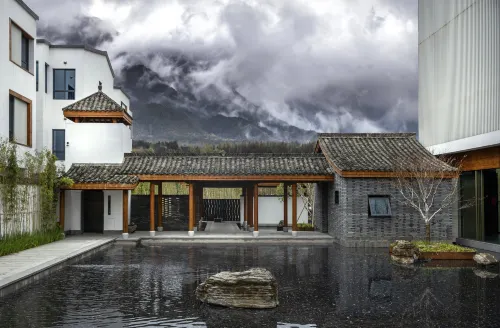
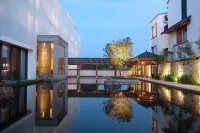
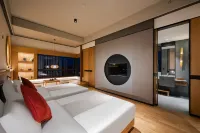
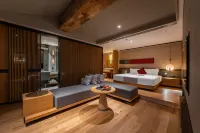
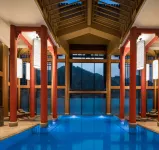
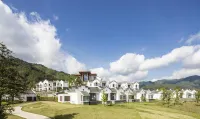
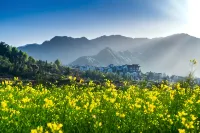
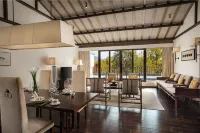
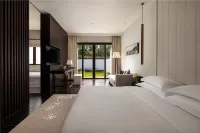
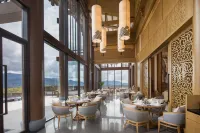
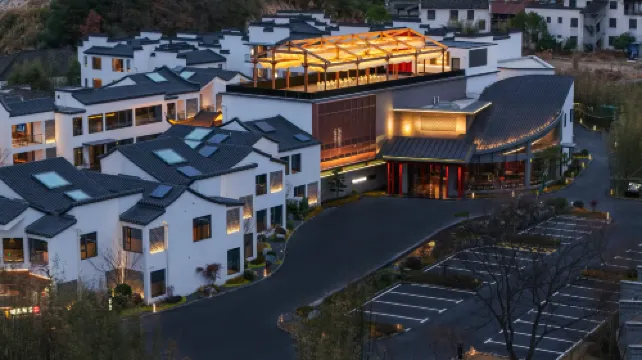
Opened in 2023, the Huangshan hongcunTanhouse Hot Spring Resort is a great accommodation choice in Yi County. Yixiandong Railway Station is located approximately 18km away and Huangshan Tunxi International Airport around 53km away. There is no shortage of things to see in the area, with the Former Residence of Sai Jinhua, Chinese Traditional Village Jiangcun - Jiang Mansion and Yujianxiuli Water Town all nearby. When guests have some time on their hands they can make use of the onsite facilities. This Yi County hotel provides parking on site. Our guests rate this hotel as one of the best hotels for cleanliness. This hotel is particularly popular with those traveling with families.
Enestående
947 anmeldelser
9,5/10
1 nat
Fra 589 PLN
99+
Hoteller i Yixian
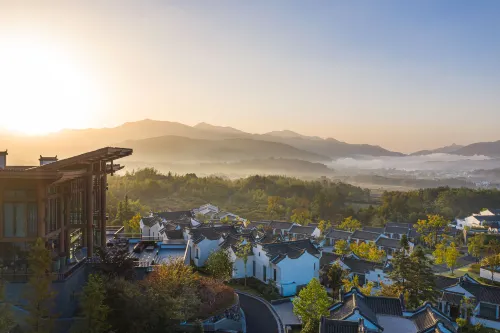
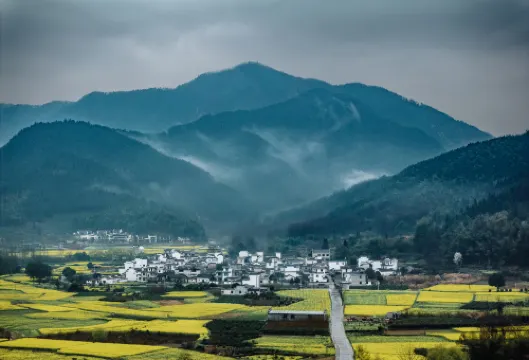
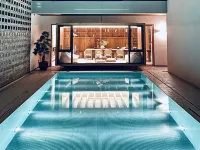
Banyan Tree Huangshan surrounded by awe-inspiring landscapes, Banyan Tree Huangshan captures the essence of Mount Huangshan’s enchanting aura of romance.Inspired by traditional Hui architecture and the Huangshan school of Chinese ink painting and calligraphy, the secluded resort exudes modern elegance. Banyan Tree Huangshan has 76 luxurious and well-appointed guestrooms , which include villas, suites. Be captivated by warm interiors of earth-toned hues, jade-coloured accents, stylish furnishings, wood and bamboo carvings depicting legendary stories and artworks illustrating Mount Huangshan’s arresting splendor.
"In general a nice relaxing stay. Good location to explore Hongcun and ancient towns. However, a little disappointed by the overall quality which is below my experience when compared to staying at other banyan tree properties. Little things like the clearness, maintenance of the property where paints are peeling etc. the most obvious is poor choice and quality of the breakfast ."
Enestående
2185 anmeldelser
9,5/10
1 nat
Fra 1.338 PLN
99+
Hoteller i Yixian
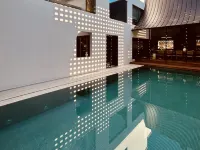
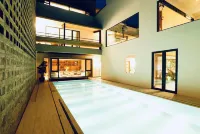
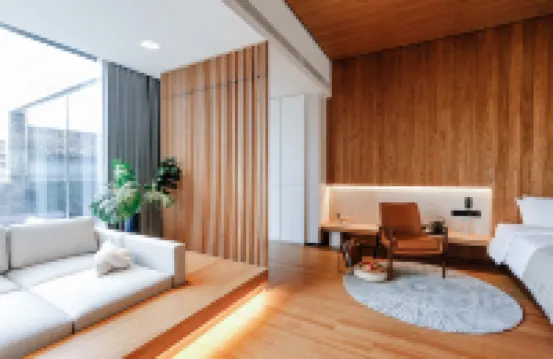
Yiyun · Bishan, located in the most artistic ancient village - Bishan, covers living spaces, dining facilities, derivative cultural and creative, cultural and outdoor spaces, etc., providing a comprehensive supporting experience for your arrival. Based on the concept of rural lifestyle, the customized travel lifestyle is rich and colorful. Shuttling through the countryside, unlocking the mystery of ancient Yi villages with one's footsteps, immersing oneself in the mountains and waters of the campsite with the waves and oars, enjoying the natural countryside of agriculture with the afterglow at the foot of the mountain, and tracing the beauty of ancient Yi's food and seasonal life; Or you can stay in our rural residence, swimming pool parties, starry sky movies on the terrace, and lively night conversations around the fireplace. No matter where you come from, you can feel a different kind of Huizhou rural life
Nature, land, time ,For thousands of years, what humanity has revered still makes us cling to love, return to simplicity, and space carries life. Yiyun Bishan strives to interpret the "New Rural Travel, Slow Life" advocated by the Yiyun brand.
Perfekt
155 anmeldelser
9,8/10
1 nat
Fra 508 PLN
99+
Hoteller i Yixian
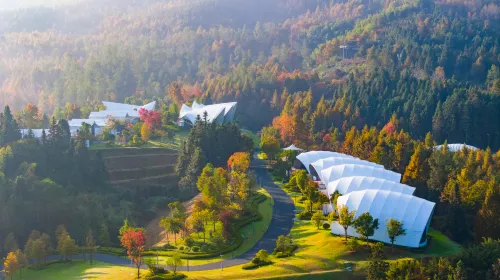
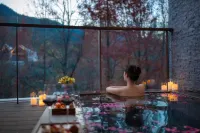
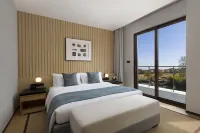
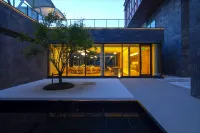
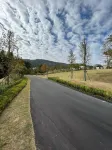
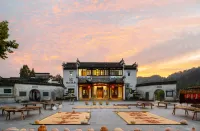
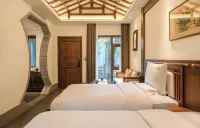
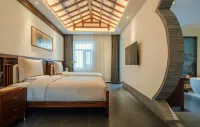
The Campsort Hotel provides a great place for travelers to relax after a busy day. The Campsort Hotel offers a pleasant stay in Yi County for those traveling for business or leisure. Qimen Railway Station is located approximately 22km away and Huangshan Tunxi International Airport around 57km away. The nearby area boasts an abundance of attractions including Donkey Dad Planet Park, Guanlu Ancient Village Scenic Area and Shouzhuo Park. In their spare time, guests can explore the hotel's surroundings. For those driving themselves, parking is provided on site. If you are looking for a convenient place to stay, our guests have told us that this location is excellent. For guests traveling with families, this hotel is consistently one of the most popular choices.
"對於自駕遊的人來説地理位置算是蠻不錯的,距離宏村、西遞都很近,開車半小以內可達,而且酒店本身所在的關麓也是一個古村落,整體自然環境是很好的。
房間設施:酒店很新,客房設施都比較現代化,儘可能的做到了智能操控,我們入住的房型是墨海,淋浴區域有私湯泡池,酒店準備玫瑰花瓣和浴鹽,很貼心。
餐廳:餐廳口味中規中矩,對我個人來説個別菜品微偏鹹
早餐:可選種類不多,但麪點檔的餛飩、麪條,芝麻包,豆沙包都非常好吃,西點不太好
性價比:整體來説性價比很不錯,推薦自駕"
Enestående
470 anmeldelser
9,3/10
1 nat
Fra 369 PLN
99+
Hoteller i Yixian
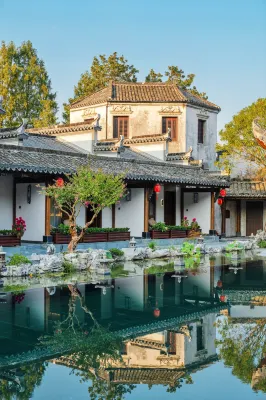
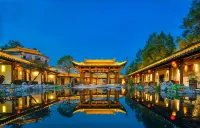
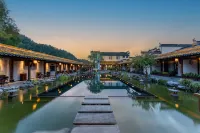
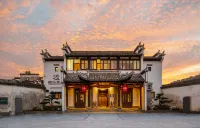
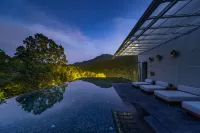
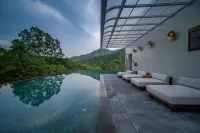
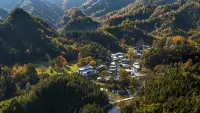
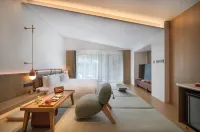
Xidi Passing-Cloud Resort · Mingjing Garden is nestled beside the Archway Square and Mingjing Lake within the ancient Xidi Village at the foot of Huangshan Mountain. The nearly 500-year-old Censor Hu Wenguang Archway greets you right at the gate, and the viewing platform offers a panoramic overlook of the entire ancient village of Xidi.As one of the well-preserved century-old residences in Xidi, Mingjing Garden consists of five Huizhou-style courtyards, three of which are heritage mansions dating back to the Ming and Qing dynasties. Boasting an elegant retro ambience, every turn reveals a distinctive scenic view.The master bedrooms draw their names from quintessential Huizhou cultural motifs, with these elements subtly integrated into the interior design of each room. All rooms are furnished with DeRUCCI mattresses, custom Egyptian cotton linens and latex pillows exclusive to Passing-Cloud, alongside authentic imported Tesori d’Oriente bath amenities. Brand-new bath towels and face towels made of Xinjiang long-staple cotton, linen slippers and peach wood combs are provided for each guest’s personal use and can be taken away as keepsakes.Housed within the resort is Passing-Cloud Cuisine, an integrated venue combining a restaurant, café and lounge bar, where guests can savour exquisite delicacies without stepping outside the premises.
"Perfect stay in the clouds resort.
We spent five nights here. I am living in Chiba for 18 years. This is the best stay in hotel since I am here. The village is touristic, but authentic and quiet in night. It’s a mix of ancient village, water, nature. The dream China.
The resort is perfectly located on the side of the lake. The common parts are wonderful, from the term, the garden, the courtyards. You can feel the soul of the country here, built by multiple generations.
The rooms are traditional but beautiful and extremely well equipped with huge shower, Japanese toilets, huge bathtub.
There is 3 courtyards, all original and authentic. You feel the heat of history.
The restaurant is the best of the city, for reasonable prices and tasty and comfortable settings.
On the top of it, very dedicated staff, trying their best to make us happy, nice breakfast, nice afternoon tea, tea ceremony… we can be only grateful to have the pleasure to stay here.
Fast train station is just ten minutes away…"
Perfekt
486 anmeldelser
9,9/10
1 nat
Fra 755 PLN


99+
Hoteller i Yixian
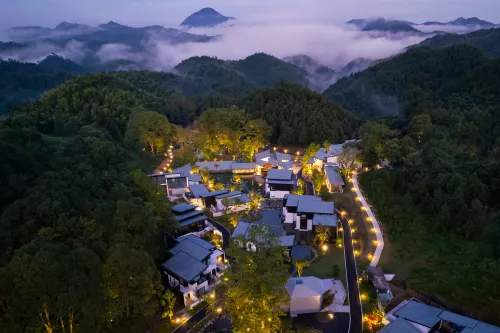
The Wish Garden provides a great place for travelers to relax after a busy day. Visitors to Yi County will find that the Wish Garden is a fantastic accommodation choice. Traveling to the hotel is easy with Yixiandong Railway Station located approximately 15km away and Huangshan Tunxi International Airport roughly 43km away. The nearby area boasts an abundance of attractions including Taohuayuan Drifting, Zuma Building and Zhangshui. At the end of a busy day, travelers can unwind and relax in the hotel or go out and enjoy the city. This Yi County hotel offers parking on site. Our guests rate this hotel as one of the best hotels for cleanliness. For guests traveling with families, this hotel is consistently one of the most popular choices.
Perfekt
268 anmeldelser
9,8/10
1 nat
Fra 1.246 PLN

99+
Hoteller i Yixian
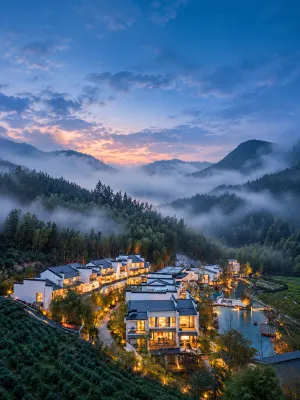
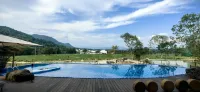
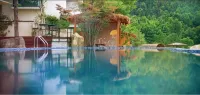
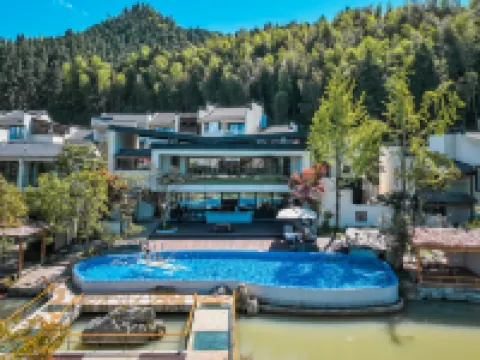
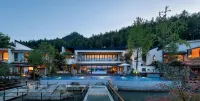
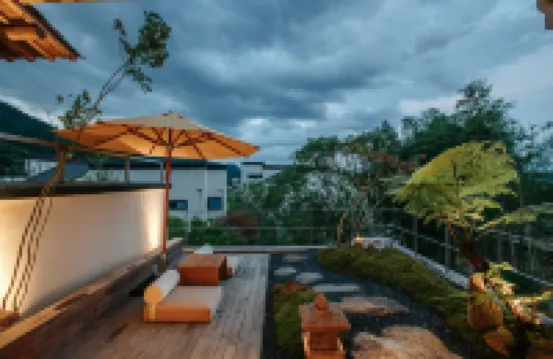
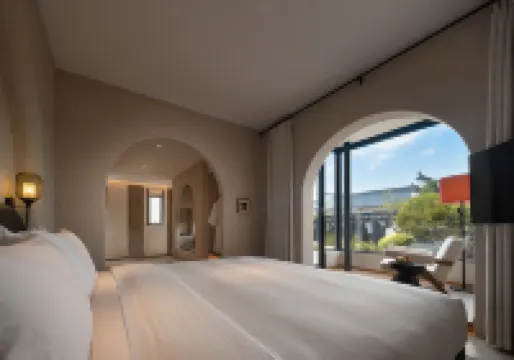
Located in the leisure, vacation, and wellness tourism destination of Huangshan, the hotel is situated in the ancient city of Yixian, a national historical and cultural city. The surrounding ancient villages such as Hongcun, Xidi, Nanping, Bishan, Shouzhuo Garden, and Xiuli are notable for their traditional Huizhou architecture and ancient Huizhou culture. The area combines this cultural heritage with the beautiful natural landscapes of Daguling, Wuxi Mountain, and Shilin Water World. The hotel, situated near Yixian in Huangshan, Anhui, covers a total area of 64 acres, with a building footprint of approximately 4,000 square meters.The property features 15 new-style Huizhou garden villas, offering 37 rooms, each equipped with modern intelligent butler services. The design concept comes from Cheng Xi, the founder of Nomadland villa resort. The villas are nestled in a landscape that combines mountains, fields, and traditional Huizhou scenic elements, creating a serene garden retreat. A winding stone path connects the new-style Huizhou architecture within the courtyard, with buildings, forests, and rice fields reflecting in the landscape pond, offering a “great peace” experience.
Perfekt
209 anmeldelser
9,8/10
1 nat
Fra 630 PLN
99+
Hoteller i Yixian
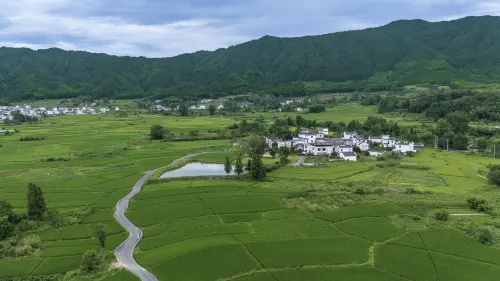
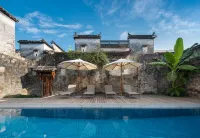
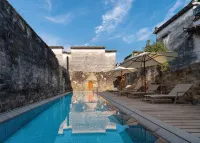
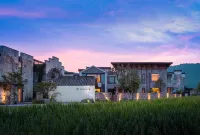
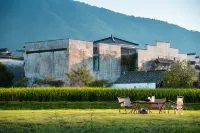
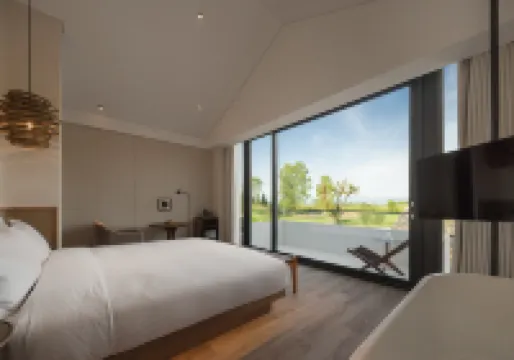
The Garden of Forking Paths, Yixian is located in Pancun, Guanlu, Yixian County, Huangshan City. Together with the ancient city of Yixian (a national historical and cultural city), the world cultural heritage sites Xidi and Hongcun, and the traditional Chinese villages of Tachuan, Bishan, Pingshan, Nanping, and others, it weaves the most classic constellation of ancient Huizhou villages. Following a winding path through a hundred mu of rice paddies, at the fork of the path stand six buildings and courtyards reconstructed on ruins; they are of different eras and contrasting styles yet wonderfully combined. The name "The Garden of Forking Paths" is taken from Borges' novel of the same name, which is the literary expression of such a scene. Guest rooms are distributed among the various courtyards, offering views of mountains, fields, or gardens. At the center stands the Boyatang · Borges Library, with its structure of bundled columns and stacked beams—a design独创 by the architect. Around it are the Zaoshu Restaurant, converted from a cattle shed; a swimming pool built amidst ruins, the only one of its kind in China; and the Pancun Shop, which gathers local goodies from neighbors. On the periphery are the Luye Starry Camp and Luye Pond. With the outlines of mountains and the lines of the fields, against the simple backdrop of nature, Eastern and Western, ancient and modern architectural cultures interweave here, making it a veritable museum of architecture in the rice fields. The Garden of Forking Paths represents a breakthrough in design boundaries: centered on the philosophical concept of "crossing, converging, and blending," it uses the rural landscape of ancient Huizhou as its canvas to paint a picture that extends through profound time and space—this is its aesthetic pursuit. It is not simply a homestay or hotel; instead, it pulses with the gentle heartbeat of ancient Huizhou villages, following the rhythm of the natural seasons to reclaim the inner order that people have lost, creating a life scene that harmonizes with nature and returns to farming and reading, restoring a genuine and simple pastoral dwelling. This is not a scene that any designer can design, but a place where you, after much searching, finally arrive to find yourself at peace—The Garden of Forking Paths: living in seclusion in the wilderness, living a simple life alongside the rice seedlings.
Enestående
131 anmeldelser
9,5/10
1 nat
Fra 542 PLN
99+
Hoteller i Yixian
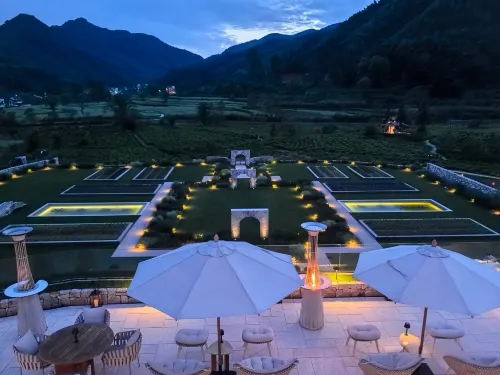
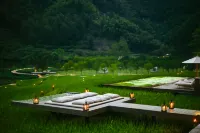
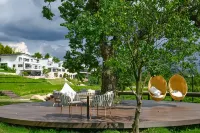
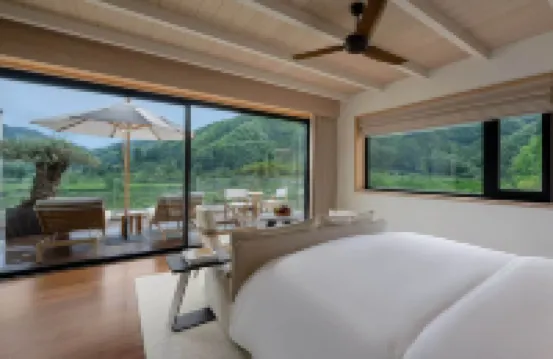
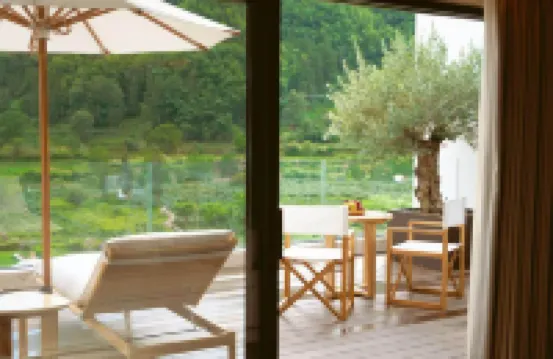
The Sixth Quarter Resort Estate is located in the scenic area of Lvcun, with a construction area of approximately 1,000 square meters. It collaborates with international top brands such as Goodman from the United States, Sika from Denmark, Dedon from Germany, CB from Italy, and AXOR from Germany. Centered on the core values of love, purity, and nature, it integrates the aesthetic of French vacations.
The minimalist design outlines the charm of mountains and waters, where nature and luxury coexist, restoring a poetic and picturesque rural experience.
The Sixth Quarter Resort Estate invites you to a romantic rendezvous among the mountains and waters of Huizhou. In the ingenious passage of time, encounter the most beautiful moments of life.
Perfekt
258 anmeldelser
9,8/10
1 nat
Fra 1.619 PLN
Ofte stillede spørgsmål
Hvilke populære 5-stjernede hoteller er der i Yixian?
Uanset om du rejser til Yixian grundet forretning eller turisme, er Huangshan hongcunTanhouse Hot Spring Resort (fra 464 PLN) , Banyan Tree Huangshan (fra 658 PLN) og THE SIXTH SEASON VACATION MANOR (fra 1.579 PLN) alle foretrukne hoteller.
Hvor meget er den gennemsnitlige pris for 5-stjernede hoteller i Yixian?
For 5-stjernede hoteller i Yixian, er gennemsnitsprisen på hverdage 1.543 PLN og i weekender (fredag-lørdag) 1.600 PLN.
Hvilke 5-stjernede hoteller i Yixian har swimmingpools?
Der er mange 5-stjernede hoteller i Yixian med swimmingpools. Huangshan hongcunTanhouse Hot Spring Resort (fra 464 PLN) , Banyan Tree Huangshan (fra 658 PLN) og THE SIXTH SEASON VACATION MANOR (fra 1.579 PLN) er meget populære.
Hvilke 5-stjernede hoteller i Yixian har fitnessfaciliteter?
Huangshan hongcunTanhouse Hot Spring Resort (fra 464 PLN), Banyan Tree Huangshan (fra 658 PLN) og Passing-cloud Resort (fra 574 PLN) har fitnessfaciliteter. Tilfredsstil dine fitnessbehov, selv når du er på farten!
Hvilke 5-stjernede hoteller i Yixian har barer?
For 5-stjernede hoteller i Yixian med barer, er Huangshan hongcunTanhouse Hot Spring Resort (fra 464 PLN) , Banyan Tree Huangshan (fra 658 PLN) og Yiyun Bishan Hotel (fra 882 PLN) meget populære.
Hvilke 5-stjernede hoteller i Yixian tilbyder morgenmad?
Huangshan hongcunTanhouse Hot Spring Resort (fra 464 PLN), Banyan Tree Huangshan (fra 658 PLN) og THE SIXTH SEASON VACATION MANOR (fra 1.579 PLN) tilbyder lækker morgenmad. Start din dag med morgenmad af høj kvalitet!
Hvilke 5-stjernede hoteller i Yixian tilbyder spa-tjenester?
Vil du slappe af med en spabehandling? Blandt 5-stjernede hoteller i Yixian, er Banyan Tree Huangshan (fra 658 PLN) og Wish Garden (fra 784 PLN) meget populære.
Hvilke 5-stjernede hoteller i Yixian har gratis wi-fi?
Internetforbindelse er en vigtig forudsætning for at kunne rejse. Huangshan hongcunTanhouse Hot Spring Resort (fra 464 PLN) og Banyan Tree Huangshan (fra 658 PLN) er populære hoteller med gratis wi-fi.
Hvilke 5-stjernede hoteller i Yixian er velegnede til familierejser?
Huangshan hongcunTanhouse Hot Spring Resort (fra 464 PLN) og Banyan Tree Huangshan (fra 658 PLN) er meget velegnede til familierejser.
Lokale rejseoplysninger
| Højeste pris | 3.786 PLN |
|---|---|
| Laveste pris | 681 PLN |
| Antal anmeldelser | 5,227 |
| Antal hoteller | 10 |
| Gennemsnitlig pris (hverdage) | 1.543 PLN |
| Gennemsnitlig pris (weekender) | 1.600 PLN |